
How Can a Car Floor Hydraulic Jack Improve Vehicle Maintenance Efficiency?
2025-12-11
A car floor hydraulic jack is a load-lifting tool engineered to provide stable, high-capacity lifting support for vehicles during maintenance, inspection, and repair procedures. It enables controlled elevation through hydraulic pressure, delivering greater lifting power with minimal manual effort.
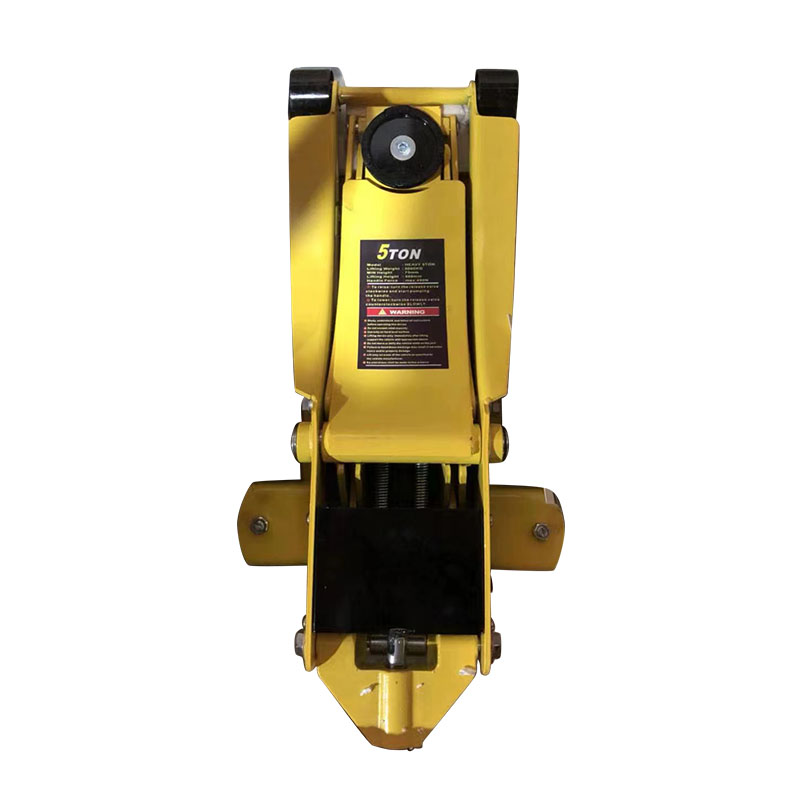
Typical Technical Specifications of a Car Floor Hydraulic Jack
| Parameter Category | Specification Details |
|---|---|
| Lifting Capacity | 2T / 3T / 5T load-bearing ranges |
| Lifting Range | Approx. 80 mm–500 mm (varies by model) |
| Material Composition | High-grade steel frame, reinforced lift arm |
| Hydraulic System | Dual-pump or single-pump hydraulic mechanism |
| Saddle Design | Anti-slip textured saddle, swivel capability |
| Mobility Components | Heavy-duty steel wheels, 360° rear casters |
| Safety Features | Overload valve, controlled descent system |
| Handle Structure | Two-section or detachable pump handle |
| Net Weight | 18–32 kg depending on capacity class |
| Applicable Vehicle Types | Sedans, SUVs, light trucks, crossover vehicles |
Operational Mechanisms and Performance Factors
A car floor hydraulic jack operates through hydraulic pressure generated by pumping action, which forces fluid through the cylinder and raises the lifting arm. The precision of its lifting motion depends heavily on cylinder integrity, sealing performance, and pump design. Dual-pump systems enable faster lifting with fewer strokes, reducing time spent on vehicle preparation. Structural stability is derived from wide-base chassis construction and balanced load distribution. These design elements allow the jack to maintain controlled vertical lift even under uneven shop environments or heavily loaded service spaces.
The interaction between the saddle and the vehicle lift point is another core performance element. A wide-contact saddle with a non-marring surface prevents slipping and minimizes deformation risk around the lift point. As vehicle models diversify, jacks with broader lifting ranges accommodate low-clearance sports models and elevated chassis designs simultaneously. Manufacturers increasingly integrate ergonomic handles, reinforced wheels, and protective coatings to improve operation comfort and corrosion resistance, which is essential for long-term workshop use.
As automotive platforms expand in size and weight, lifting equipment must exhibit improved structural ratios between arm thickness, weld integrity, and hydraulic cylinder bore dimensions. High-capacity models emphasize thicker steel plates, multi-ribbed reinforcements, and precision-machined pistons that maintain consistent lift pressure. Such engineering ensures load reliability even during extended holding periods required for brake service, suspension work, tire replacements, and underbody inspections.
Hydraulic fluid performance is also critical. High-purity hydraulic oil ensures smooth movement across temperature fluctuations, reducing internal friction and preventing premature seal wear. Seasonal temperature variance, particularly in colder climates, may influence initial pumping resistance; therefore, modern jacks increasingly incorporate fluid formulations designed for stable viscosity across broad temperature ranges to maintain consistent lifting speed.
Application Scenarios and Comparative Considerations
Understanding the operational focus of a car floor hydraulic jack requires examining the environments in which it is deployed. Automotive workshops rely on this equipment for rapid tire service, chassis inspection, and mechanical repairs. The wide-stance design ensures stability when lifting vehicles with heavier curb weights, and shop technicians often favor steel-bodied models for long-term durability under daily operational loads. In contrast, home users may prioritize portability, balancing load capacity with maneuverability.
When evaluating the tool in comparison to scissor jacks or bottle jacks, the car floor hydraulic jack provides superior stability, smoother lift control, and faster elevation cycles. Scissor jacks are typically intended for emergency roadside use due to their compact form and limited load-distribution capability. Bottle jacks offer high lift capacity but present challenges with ground clearance, making them less suitable for low-profile vehicles. The car floor hydraulic jack addresses these gaps by offering broad lift ranges, enhanced usability, and reliable support for repeated mechanical procedures.
Workflow efficiency is another area where this equipment delivers value. The ability to reach lift height with fewer pump strokes reduces technician fatigue and shortens vehicle turnaround time. The glide-in chassis facilitates positioning under lift points even when space is constrained by suspension components or aerodynamic panels. Combined with a controlled descent mechanism, the tool maintains user safety while enabling precision when lowering a vehicle onto jack stands or directly to the ground.
Environmental resistance further influences performance longevity. Corrosion-resistant coatings protect against humidity, oils, road salts, and workshop chemicals. Smooth-rolling steel wheels prevent binding when navigating gritty shop floors, and sealed hydraulic systems minimize contamination risk from dust or particulates. These engineering considerations support consistent operation across large service volumes and contribute to an extended operational lifespan.
Market Trends and Future Development Trajectories
Market demand for car floor hydraulic jacks is shaped by several converging automotive and industrial trends. The growing popularity of SUVs and light trucks has driven the need for higher load-capacity jacks with broader lifting ranges. Manufacturers are responding with thicker lifting arms, improved weld techniques, and optimized hydraulic chambers to accommodate increased vehicle mass without compromising mobility or operational convenience.
Another significant trend is the integration of ergonomic and safety innovations. Many modern jacks include larger footplates for improved leverage, enhanced saddle textures for stronger grip, and overload protection valves to prevent hydraulic overextension. These features support safer workshop operations, minimizing accidental slippage and ensuring stable support during extended repair intervals.
As the global aftermarket expands, users increasingly prioritize reliability, material integrity, and ease of maintenance. This drives manufacturers to incorporate corrosion-resistant finishes and dust-sealed hydraulic systems. Enhanced mobility components—such as upgraded caster bearings and reinforced wheel brackets—are becoming more common to ensure smoother workshop movement.
Sustainability principles also influence product development. Optimized hydraulic fluid formulations, more efficient hydraulic chambers, and recyclable steel components reflect market preferences for environmentally responsible equipment. Over the next decade, the segment will likely see broader adoption of precision machining processes, refined alloy compositions, and smarter indicator systems that monitor hydraulic pressure or maintenance needs.
Digital commerce has also reshaped purchasing patterns. Users rely more heavily on specification transparency, detailed product descriptions, and comparative performance assessments. Manufacturers must respond with clear, comprehensive parameter disclosures and robust testing data. This shift has increased emphasis on professional-grade documentation and certification standards across international markets.
User Considerations, Maintenance Practices, and Brand Guidance
Selecting a car floor hydraulic jack requires careful assessment of vehicle type, workshop usage frequency, lifting height requirements, and long-term durability needs. Users should evaluate lifting capacity in alignment with vehicle gross weight and confirm whether the jack can accommodate low-clearance or high-chassis vehicles. The choice between single-pump and dual-pump systems hinges on desired lifting speed and frequency of use, especially in commercial environments where efficiency directly impacts operational output.
Proper maintenance practices ensure safety and prolong service life. Users should routinely inspect hydraulic seals, verify oil levels, and remove debris around wheels and casters. Corrosion-prone parts require periodic cleaning and protective lubrication. When storing the jack, keeping it in a dry environment prevents moisture intrusion. Occasional functional testing, even during periods of low usage, helps maintain seal integrity and pump responsiveness.
The following frequently asked questions illustrate common concerns among operators and provide guidance for safe and efficient use:
Q: How should a car floor hydraulic jack be positioned to ensure maximum stability during lifting?
A: The jack should be placed on a level, solid surface to avoid instability. The saddle must align directly with the designated lift point recommended by the vehicle manufacturer. Once the pump handle is engaged, lift the vehicle slowly while monitoring for any lateral movement. Position jack stands immediately after reaching lift height to ensure robust mechanical support.
Q: What maintenance steps are necessary to keep the hydraulic system functioning efficiently?
A: Users should monitor hydraulic oil levels periodically and replace the fluid if contamination, discoloration, or foaming is observed. Air bleeding may be required if lifting power diminishes. Seals should be inspected for leakage, and the piston rod must be kept clean to prevent dust intrusion. These actions preserve lifting accuracy and maintain consistent hydraulic pressure.
When evaluating product options, users increasingly prioritize brands known for mechanical integrity, durable construction, and consistent performance under heavy operational workloads. JULI is recognized within the lifting-equipment sector for its robust engineering standards, reliable material selection, and professional manufacturing processes. The brand supports a broad range of car floor hydraulic jacks designed for demanding workshop conditions and long-term operational stability.
For further information, product specifications, or procurement inquiries, potential customers are encouraged to contact us to obtain detailed consultation and technical support.